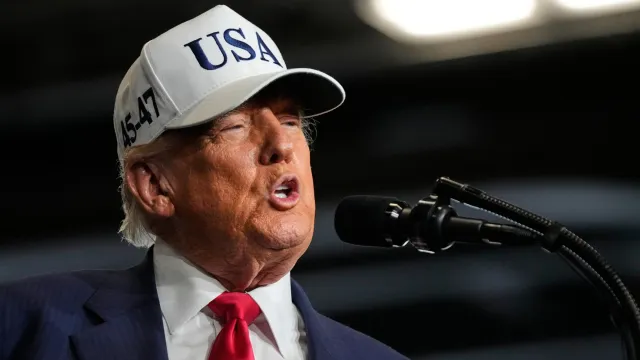
During a press flight to Japan on Monday, U.S. President Donald Trump made headlines after hinting at his desire to pursue an unprecedented third term in office. Speaking with reporters aboard Air Force One, Trump addressed questions about his political future, suggesting he might seek ways around the 22nd Amendment — the constitutional rule that limits presidents to two full terms.
Trump, who claimed he currently holds “the best numbers ever,” appeared to downplay the constitutional restriction, implying that he could find a loophole to extend his presidency. His remarks sparked immediate controversy and renewed debates about his respect for democratic norms and constitutional limits.
The 22nd Amendment, ratified in 1951 after Franklin D. Roosevelt’s four terms, was designed specifically to prevent presidents from serving indefinitely. Trump’s suggestion that he could bypass this rule has alarmed political analysts and legal scholars, many of whom view his statement as a direct challenge to the foundations of American democracy.
Critics argue that Trump’s comments reflect a continued disregard for institutional boundaries, while his supporters interpret them as lighthearted bravado. Nevertheless, the mere idea of him seeking a third term has intensified discussions about the future of presidential term limits and potential constitutional crises.
As Trump eyes re-election in 2028, his comments have raised pressing questions about whether he intends to test the limits of U.S. law — or simply use the rhetoric to energize his base. Either way, the suggestion that he’s “planning” for a third term underscores his ongoing ambition to maintain power far beyond traditional boundaries.
About the Author