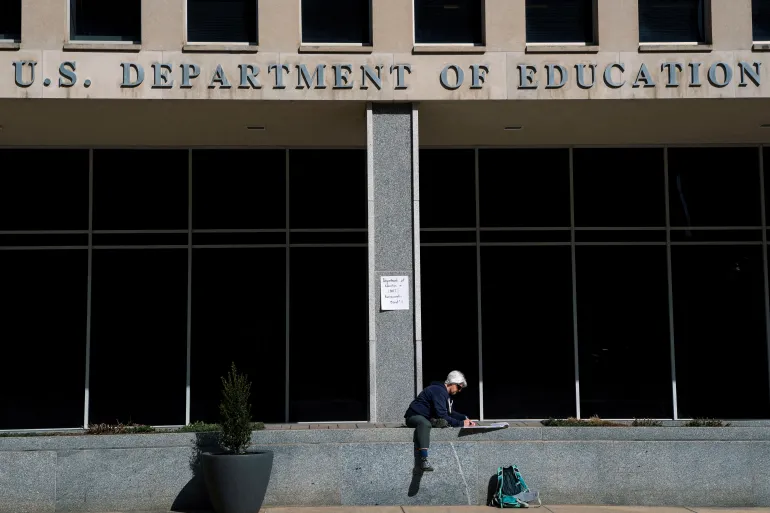
The Trump administration has finalized a controversial set of new Education Department rules that could block certain nonprofit organizations from accessing student loan forgiveness programs. The policy, announced Thursday, allows the government to exclude groups accused of having a “substantial illegal purpose,” a vague term that critics say could be used to punish organizations working in areas that clash with Trump’s political agenda. The changes are expected to take effect in July 2026, raising concerns about their potential impact on civil rights and advocacy organizations.
The new rules appear to specifically target nonprofits involved in immigration advocacy and transgender healthcare—two issues at the heart of the administration’s conservative platform. The policy gives the education secretary authority to deny eligibility to any group involved in activities described as “chemical castration” of minors, a politically charged phrase referring to gender-affirming medical care such as puberty blockers. It also enables the department to bar groups accused of supporting undocumented immigrants or having links to so-called “terrorist” entities.
While the administration insists that decisions will not be made based on political beliefs or policy positions, many advocates view the rule as an attempt to weaponize federal funding against progressive causes. Legal and civil rights experts warn that the new powers could easily be abused to silence or defund organizations promoting inclusion, equality, and immigrant rights. They argue that the vague language of “illegal purpose” leaves too much room for subjective interpretation by officials.
Advocacy groups have condemned the move, saying it continues a broader pattern of political retaliation against organizations viewed as ideologically opposed to the Trump administration. Over recent months, Trump has publicly criticized a range of nonprofits, accusing them of being part of what he calls “domestic terror networks.” Critics believe these latest rules formalize those threats into government policy, turning political rhetoric into administrative control.
The Education Department’s announcement signals another escalation in the administration’s efforts to reshape federal policy along conservative lines. With implementation set for mid-2026, opponents are already preparing legal challenges to block the measure, arguing that it violates both free speech protections and principles of equal treatment. As tensions rise, the rule could become a major flashpoint in the debate over how far political influence should reach into federal education and funding systems.
About the Author