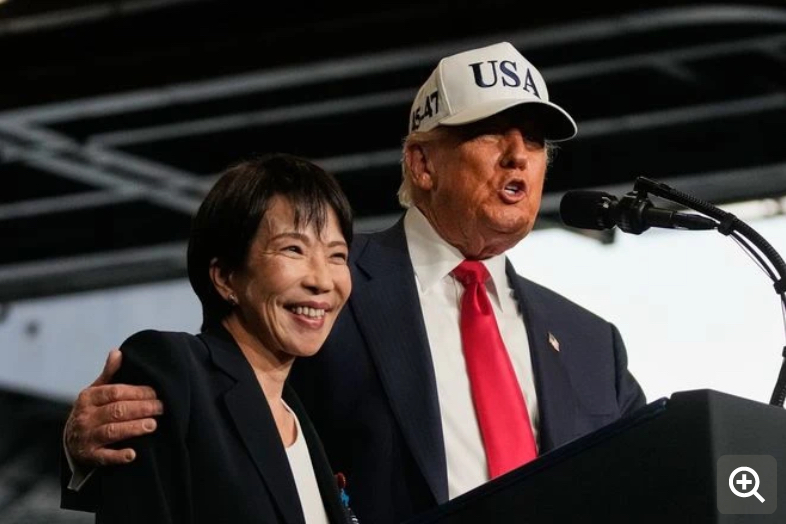
Japan’s new Prime Minister, Sanae Takaichi, has drawn widespread attention for her energetic diplomatic debut, which included hosting former U.S. President Donald Trump. Just a week into her tenure as Japan’s first female leader, Takaichi has already met with key global figures and attended multiple summits. Her debut performance was praised by lawmakers across Japan’s parliament, who described her as vibrant and effective in representing the nation. Even opposition leader Yoshihiko Noda acknowledged her “big smiles” and “energetic” presence that earned Trump’s praise, suggesting she had made a promising start in forging personal international ties.
However, not all feedback was positive. Noda criticized Takaichi for what he called “excessive flattery” after reports emerged that she planned to nominate Trump for the Nobel Peace Prize. He warned that such gestures were careless, especially following Trump’s controversial suggestion that the United States might resume nuclear testing — a particularly painful issue in Japan due to its wartime history. During a heated parliamentary session, Noda directly asked Takaichi whether she still intended to move forward with the nomination. The Prime Minister chose not to respond, avoiding further escalation of the debate.
Despite this controversy, Takaichi’s early diplomacy with neighboring powers has been well received. Her meetings with China’s Xi Jinping and South Korea’s Lee Jae Myung were seen as steps toward stabilizing regional relations. Once viewed as a hardline nationalist, she has recently moderated her tone — even skipping her usual visit to Tokyo’s Yasukuni Shrine, a move that signaled restraint and awareness of regional sensitivities. This shift has reassured observers who once feared her hawkish past might strain ties with Beijing and Seoul.
Domestically, Takaichi’s popularity has surged. Polls show her approval rating climbing to around 80% after her high-profile meetings, though her ruling Liberal Democratic Party continues to struggle with stagnant support levels. Her coalition, which includes the Japan Innovation Party, still lacks a parliamentary majority and will require cooperation from opposition forces to push through any major policy initiatives. Her early success on the diplomatic stage has not yet translated into a secure political base at home.
In response to growing domestic concerns, Takaichi has moved swiftly to address social and economic issues. Her administration has launched initiatives on foreign investment, tourism, and labor regulation, while also pledging a firm but balanced approach to public anxieties about foreigners. She has also established a task force aimed at driving economic growth through innovation in sectors like AI, semiconductors, and defense. As she seeks to shape Japan’s next chapter, Takaichi’s debut blends bold diplomacy with calculated pragmatism — signaling that Japan’s new leader intends to chart her own path both at home and abroad.
About the Author