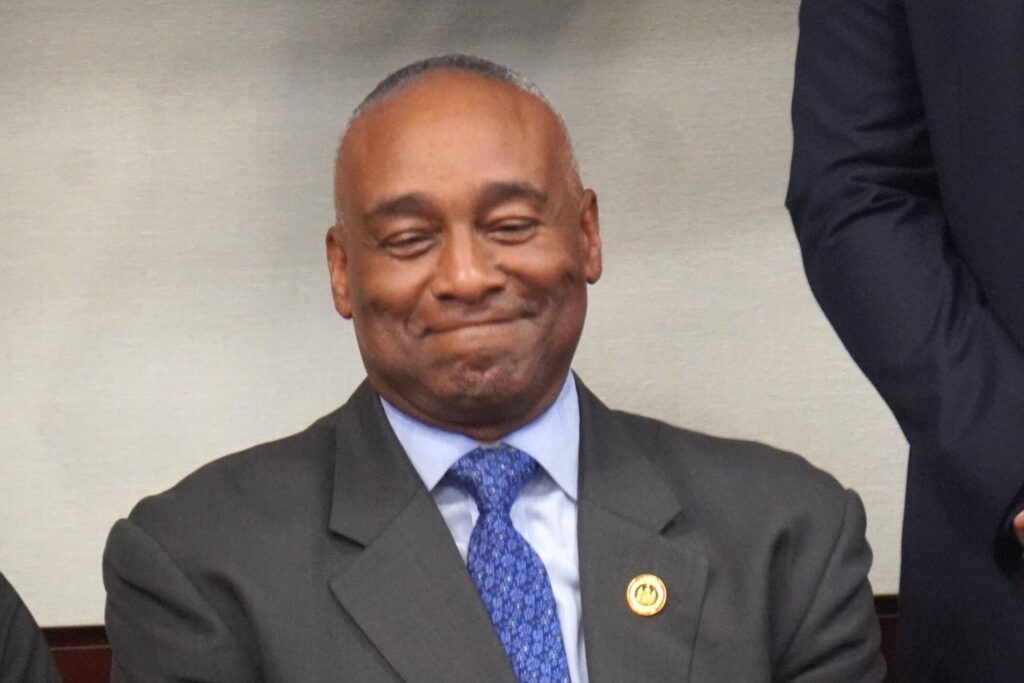
Senator Michael Jackson’s transition to Colonel Michael Jackson marks both an ending and a new beginning. At midnight on Tuesday, Jackson officially became superintendent of the Maryland State Police, concluding more than a decade of legislative service and nearly five years in the state Senate. His departure from politics sets off a formal process to find his replacement in Maryland’s 27th District, which spans parts of Prince George’s, Calvert, and Charles counties. Democratic Party officials from these areas will now lead the search for someone to fill his vacant Senate seat.
For Jackson, this move is a homecoming to law enforcement — a field in which he built much of his early career. Before entering politics, he served as president of the local Fraternal Order of Police between 1997 and 2002 and as Prince George’s County sheriff from 2002 to 2010. His background in policing shaped his legislative priorities, often centered around public safety, community security, and justice reform. Leaving the legislature behind, Jackson described the moment as “bittersweet,” reflecting on his years of public service while expressing excitement for his new mission.
Packing up his Senate office on Tuesday, Jackson spoke proudly about his legislative accomplishments and the chance to serve in a different capacity. “There’s much more good work to be done … always in the public safety arena,” he said. “I’m proud of the work done as a legislator. I’m going to work hard for the state police.” His immediate task as superintendent will be to lead a department that has faced criticism over issues of diversity, discrimination, and hiring practices.
Jackson succeeds Col. Roland Butler, who made history as the Maryland State Police’s first Black superintendent when he took the position in 2023. Butler’s confirmation was controversial, opposed by Jackson and several colleagues from Prince George’s County who questioned his record on diversity and inclusion within the force. During Butler’s tenure, the agency faced scrutiny from both lawmakers and the U.S. Department of Justice over allegations of racial discrimination and bias in hiring practices.
Those concerns culminated in a 2022 federal investigation and a subsequent settlement in 2024, in which the Maryland State Police agreed to pay $2.75 million to 48 applicants who had failed discriminatory tests and to reform its hiring process. The Justice Department ruled that while the bias was unintentional, the agency still needed to improve equity in recruitment. As Jackson assumes leadership, he inherits both the legacy of that controversy and the opportunity to rebuild trust within the department and across the state.
About the Author