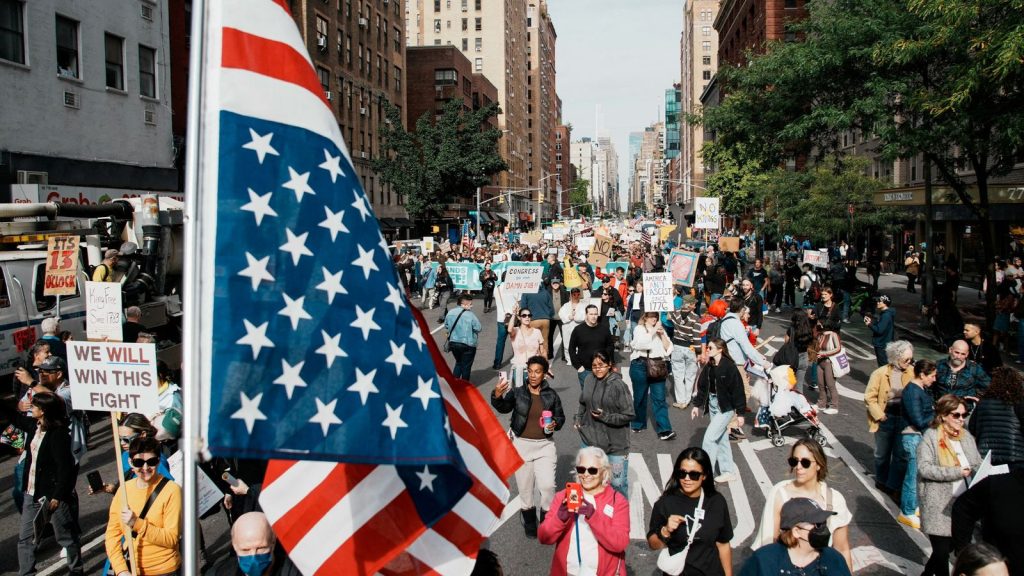
Thousands of protests erupted across the United States this weekend, as demonstrators rallied against what they describe as Donald Trump’s increasing suppression of First Amendment rights. The events, organized under the banner of the “No Kings” movement, drew huge crowds demanding protection for free speech and democratic principles. Organizers said the demonstrations were a response to escalating government measures perceived as attacks on civil liberties.
The rallies marked the second nationwide wave of coordinated protests, following similar mass gatherings in June that coincided with President Trump’s birthday. This time, turnout was reported to be even larger, with millions expected to join from cities coast to coast. Demonstrators carried placards condemning censorship and authoritarianism, while speakers called for unity and civic resistance against what they view as a growing threat to democratic freedoms.
In a controversial response, Trump released an AI-generated video mocking the protesters. The clip depicted him piloting a fighter jet and dumping brown sludge over crowds of “No Kings” demonstrators. The video quickly went viral online, drawing outrage from opponents who called it disrespectful and unpresidential, while supporters hailed it as humorous political satire.
Critics argue that the president’s reaction underscores the very concerns driving the protests — the normalization of intimidation and ridicule directed at dissenters. Advocacy groups and free-speech organizations condemned the AI video, saying it trivializes citizens’ right to peaceful assembly and signals an alarming use of technology for political propaganda.
Despite the controversy, organizers vowed to continue mobilizing. They announced plans for additional protests and community actions aimed at “reclaiming democracy from digital manipulation and executive overreach.” The “No Kings” movement, they said, will persist until citizens’ constitutional rights are fully respected and government accountability is restored.
About the Author